Best Credit Cards for Gig Economy Workers in 2026: Rideshare, Delivery, and Freelance
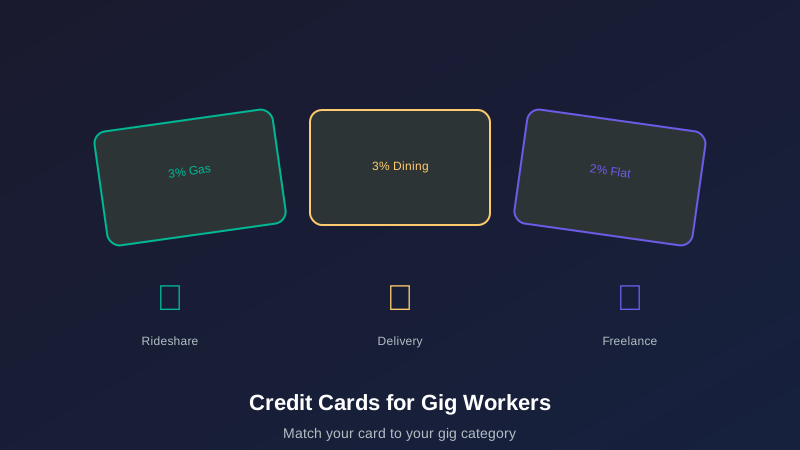
Gig economy workers — rideshare drivers, food delivery couriers, freelance designers, and independent contractors — share a common financial challenge: irregular income paired with work-related expenses that come out of your own pocket. The right credit cards for gig workers can help you earn cash back on gas and dining, manage cash flow during slow weeks, and build credit history even without a W-2 paycheck.
This guide covers the best credit card options for three main gig categories and explains how to maximize rewards while building a strong credit profile with variable income.
Best Credit Cards for Rideshare Drivers
Rideshare drivers (Uber, Lyft) spend heavily on gas, vehicle maintenance, and sometimes food while on the road. The best credit cards for rideshare drivers maximize returns on these specific categories:
- Blue Cash Preferred (Amex) — 3% cash back at US gas stations (on first $6,000/year, then 1%) and 6% at US supermarkets. The $95 annual fee pays for itself if you spend more than $3,200/year on gas and groceries combined.
- Chase Freedom Unlimited — 1.5% flat cash back on everything, with 3% on dining and drugstores. No annual fee. Simple and effective for drivers who want one card for all expenses.
- Citi Custom Cash — 5% cash back on your top eligible spending category each billing cycle (up to $500/month). If gas is your biggest monthly expense, this card effectively gives you 5% back on gas automatically.
Best Credit Cards for Delivery Workers
Food delivery couriers (DoorDash, Uber Eats, Grubhub) and package delivery workers have different spending patterns than rideshare drivers:
- Chase Sapphire Preferred — 3x points on dining (including delivery), 2x on travel. If you also drive for rideshare, the travel bonus applies to gas in some categories. $95 annual fee.
- Capital One SavorOne — 3% cash back on dining, entertainment, and grocery stores. No annual fee. The dining category covers most food delivery-related expenses.
- Amex Gold Card — 4x points on dining worldwide and 4x at US supermarkets. The $250 annual fee is steep, but the dining rewards are unmatched. Best for full-time delivery workers with high monthly spending.
Best Credit Cards for Freelancers
Freelancers and independent contractors have the most diverse spending patterns. Software subscriptions, coworking spaces, equipment, and internet costs make category-specific cards less valuable. The best approach is often a combination:
| Card | Best For | Rewards | Annual Fee |
|---|---|---|---|
| Chase Ink Business Unlimited | General business spending | 1.5% cash back on everything | $0 |
| Amex Blue Business Plus | Flexible rewards | 2x points on first $50K/year | $0 |
| Capital One Spark Cash | Simplicity | 2% cash back on everything | $0 (first year), $95 after |
| Chase Ink Business Cash | Office & internet | 5% on internet/phone/office | $0 |
For freelancers who already use personal credit cards effectively, our detailed guide to credit cards for freelancers covers business credit cards, separating personal and business expenses, and tax implications.
Building Credit with Irregular Income
One of the biggest challenges for gig workers is building credit with irregular income. Traditional credit card applications ask for annual income, and variable gig earnings can make it hard to qualify. Here is how to work around this:
- Report all income sources — Include income from all gig platforms, not just your primary one. Banks typically accept self-reported income for credit card applications, so include your total expected annual earnings from all sources.
- Start with a secured card if needed — If your credit history is thin or your income is hard to document, a secured credit card is the fastest way to build credit. Use it for small monthly purchases and pay in full each month.
- Keep utilization below 30% — Even during slow months, avoid maxing out your cards. High utilization damages your credit score regardless of your payment history. If you need to carry a balance during a slow month, try to keep it below 30% of your credit limit.
- Pay on time, every time — Payment history is the single most important credit score factor. Set up autopay for at least the minimum payment, then manually pay the full balance when you can.
- Consider becoming an authorized user — If a family member or partner has a card with a long, positive history, being added as an authorized user can boost your score without requiring you to qualify independently.
Cash Flow Management Tips for Gig Workers
Credit cards can be a cash flow management tool for gig workers with irregular pay cycles:
- Use your card's grace period — Most cards give you 21-25 days between the statement date and the payment due date. If you time your purchases right, you can effectively get a 30-55 day interest-free loan on work expenses.
- Look for 0% APR introductory offers — If you need to make a large work-related purchase (new phone, laptop, car repair), a 0% APR card lets you spread payments over 12-18 months without interest. Just be sure to pay it off before the promotional period ends.
- Track your work spending separately — Use one card exclusively for business expenses and another for personal spending. This simplifies tax preparation and helps you understand your actual net income.
Before choosing a card based on a signup bonus, read our analysis of signup bonuses vs annual fees to understand the true long-term value of each card.
Conclusion
Gig economy workers need credit cards that match their specific spending patterns and income reality. Rideshare drivers benefit most from gas and general cash back cards. Delivery workers should prioritize dining rewards. Freelancers do best with flat-rate business cards that cover diverse spending. The common thread for all gig workers: choose cards with no annual fee (or fees that pay for themselves), use them consistently to build credit, and manage cash flow carefully to avoid the trap of high-interest debt during slow months. The right credit card is a tool that works for you — not another expense that drains your variable income.