How to Dispute a Credit Card Charge: Step
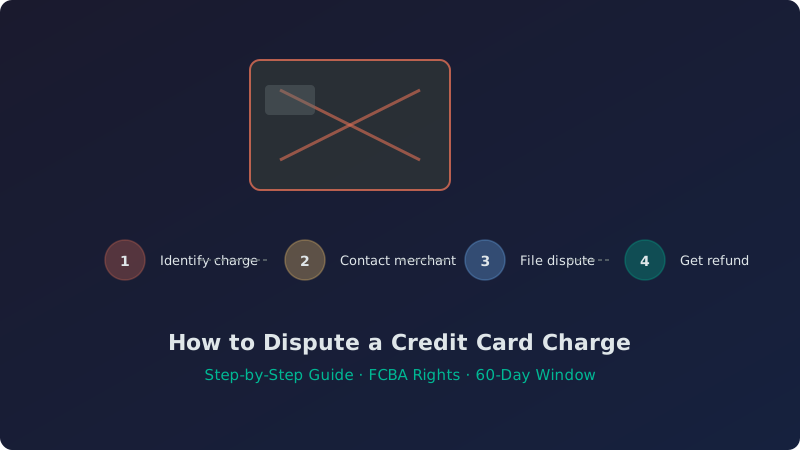
Spotting an unfamiliar charge on your credit card statement is stressful, but the dispute process is more straightforward than most people realize. Under the Fair Credit Billing Act (FCBA), you have specific rights and protections when it comes to disputing credit card charges. This guide walks you through the entire process — from identifying a suspicious charge to getting your money back.
Valid Reasons to Dispute a Charge
Not every charge you regret is disputable. Here are the categories that qualify for a formal dispute:
- Unauthorized charges: Purchases you did not make or authorize. This includes stolen card numbers and identity theft.
- Billing errors: Incorrect amounts, duplicate charges, or charges for items you returned.
- Goods not received: You paid for something that was never delivered.
- Goods or services not as described: What you received is significantly different from what was advertised.
- Recurring charges after cancellation: A subscription you cancelled that continues to bill you.
Buyer's remorse — regretting a legitimate purchase — is not a valid dispute reason. For that, you would need to work with the merchant directly for a return or refund.
Step-by-Step Dispute Process
Step 1: Identify and Document the Charge
Review your statement carefully. Note the charge amount, date, merchant name, and any reference number. Take a screenshot of the charge in your online banking or app. If you do not recognize the merchant name, search for it — many charges appear under a different business name than the one you know.
Step 2: Contact the Merchant
For most disputes (except unauthorized charges), your first step should be contacting the merchant directly. Many issues — duplicate charges, wrong amounts, undelivered items — can be resolved faster with the merchant than through a formal chargeback. Document your communication: save emails, note the date and time of phone calls, and record the name of the person you spoke with.
Step 3: Contact Your Card Issuer
If the merchant does not resolve the issue, or if the charge is unauthorized, contact your card issuer. You can typically do this through:
- Your bank's mobile app (most now have a "dispute charge" button right on the transaction)
- Phone call to the number on the back of your card
- Written letter to the address listed on your statement for billing inquiries
Provide: the charge details, why you are disputing it, and any documentation from your merchant contact attempt.
Step 4: Follow Up in Writing
Under the FCBA, you should also send a written dispute letter to your card issuer at the address specified for billing inquiries (not payment address). Include your account number, the charge details, and the reason for the dispute. Send it certified mail so you have proof of delivery. This letter must be received within 60 days of the statement date containing the charge.
Step 5: Wait for the Investigation
Your card issuer has 30 days to acknowledge your dispute and up to 90 days (two billing cycles) to investigate and resolve it. During the investigation:
- You are not required to pay the disputed amount or any related finance charges.
- The issuer cannot report the disputed amount as late to credit bureaus.
- You must continue paying any undisputed portions of your bill on time.
Your Rights Under the Fair Credit Billing Act
| Protection | Details |
|---|---|
| Liability cap for unauthorized charges | $50 maximum by law; $0 with most major issuers |
| Time to file a dispute | 60 days from the statement date |
| Investigation timeline | 30 days to acknowledge; 90 days to resolve |
| Payment during investigation | You do not need to pay the disputed amount |
| Credit reporting protection | Disputed amount cannot be reported as delinquent |
For more details on how fraud detection works before you even notice a charge, see our article on AI credit card fraud detection in 2026.
Common Dispute Scenarios
Subscription You Cancelled That Keeps Billing
This is increasingly common with streaming services, gym memberships, and app subscriptions. If you cancelled but the charges continue, dispute each one. Also contact the merchant in writing to confirm cancellation. Keep proof of your cancellation email or confirmation number.
Online Purchase Never Arrived
Check the estimated delivery date first. If it has passed and the merchant has not responded to your inquiry, file a dispute. Your card issuer will typically ask for the order confirmation and any communication with the seller.
Double Charged at a Restaurant or Store
This happens frequently and is usually an honest mistake. Contact the merchant first — most will reverse the duplicate charge immediately. If they do not respond, file a dispute with your card issuer and include the receipt showing the correct amount.
Tips for Preventing Disputable Charges
- Set up transaction alerts: Most card apps let you receive push notifications for every purchase. Unauthorized charges get spotted immediately.
- Use virtual card numbers for online shopping: Services like Privacy.com or your card's built-in virtual number feature limit exposure if a merchant is compromised.
- Check statements weekly: Do not wait for your monthly statement. Review pending charges at least once a week.
- Read your statement carefully: Small unauthorized charges ("card testing") often precede larger ones. Learn more about reading statements in our credit card statement guide.
Conclusion
Disputing a credit card charge is a well-defined process protected by federal law. The most important thing is acting quickly — within 60 days — and documenting everything. Start with the merchant when appropriate, then escalate to your card issuer. In most cases, the process works as intended and you get your money back. The best defense, however, is prevention: monitor your accounts regularly, use transaction alerts, and consider virtual card numbers for online purchases to minimize your exposure.